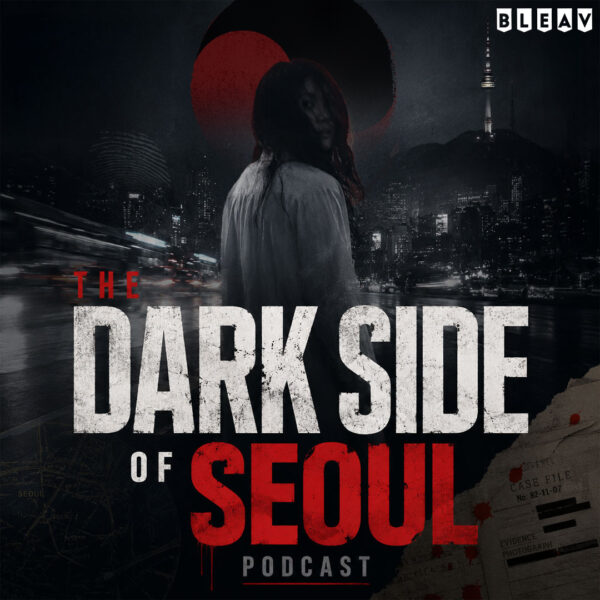
Korean Ghost Stories 2026, The Dark Side of Seoul’s annual ghost-story episode, returns with four stories spanning five centuries. Shawn tells a tale from the 1525 Yongjae Chonghwa about a fortune-telling ghost living in a noble household’s crossbeams and explains why its real target was the Joseon aristocracy. Joe reads two modern stories from Korean horror message boards, one about a girl outside a rural window in midwinter and one about a woman peering around a funeral hall door. Shawn closes with an alleged true haunting recorded by a Buddhist monk, involving a crowded inn near the border in Gangwon-do and three figures that followed a man home.
Content note: the Gangwon-do account includes references to a suicide attempt and an alleged murder-suicide.
Topics discussed:
Shawn’s “I Hate Spooky Season” essay and why the term bugs him
Travel writers, influencers and free stuff
The Yongjae Chonghwa, Seong Hyeon and a ghost that exposes a secret
Joseon household gods and the Seongju in the roof beams
The Handprints Inside the Window
Why ghost children land across cultures
An alleged 1990s haunting in Gangwon-do
What shamans charge, and what that says about folk religion
The Woman at the Funeral Hall Door
How Korean urban legends spread online
Timestamps:
00:00:06 Welcome, masks and costumes
00:02:33 Shawn’s Substack and “I Hate Spooky Season”
00:04:58 Influencers and free stuff
00:08:18 Four stories for Korean Ghost Stories 2026
00:11:40 The Yongjae Chonghwa and Seong Hyeon
00:16:56 The ghost and the missing hairpin
00:20:19 Why the story was a warning to the nobility
00:24:38 The Seongju and the crossbeams
00:26:06 The Handprints Inside the Window
00:30:09 Why children are creepy, and M.R. James
00:34:08 An alleged haunting in Gangwon-do
00:48:13 Shamans, exorcisms and what they charge
00:57:37 Korea 40 years ago and the old-timers who remember it
01:00:50 The Woman at the Funeral Hall Door
01:05:13 Where these stories come from
01:08:34 The Ghost Walk, plugs and goodbyes
Mentioned in this episode:
Yongjae Chonghwa, by Seong Hyeon (published 1525)
Shawn’s Substack, Welcome to Savage Hollar, including “I Hate Spooky Season” and the series “Not the Korean Ghosts You May Know”
Supernatural Encounters in South Korea, by Shawn Morrissey
Lost Hearts and Ghost Stories of an Antiquary, by M.R. James
The Haunting of Hill House, by Shirley Jackson
The Old Dark House (1932)
Joe’s stories are adapted from anonymous accounts on Korean horror sites. The Handprints Inside the Window and The Woman at the Funeral Hall Door are from a 2021 repost on the blog 내돈내산 (ndns.tistory.com/213), credited there to MSKA Audio.
The ZenKimchi Food and Travel Podcast
Dark Side of Seoul Ghost Walk: darksideofseoul.com
Contact: [email protected]
About the podcast:
The Dark Side of Seoul explores Korea’s hidden history, true crime, folklore, ghost stories, urban legends, disasters, political scandals, and the strange corners of Korean culture that rarely make it into guidebooks. Hosted by long-time Korea residents Joe McPherson and Shawn Morrissey, the show blends historical research, cultural analysis, and firsthand experience to examine the people, events, beliefs, and mysteries that have shaped the Korean peninsula.
Some episodes take deep dives into forgotten historical events, serial killers, political intrigue, and supernatural traditions. Others tackle current events and unusual news stories through our shorter ‘Fun Sized’ episodes, connecting today’s headlines to larger patterns in Korean society.
Whether we’re discussing Joseon-era conspiracies, haunted mountains, cults, disasters, ghost encounters, or modern social issues, our goal is always the same: to explore the darker side of Korea with curiosity, skepticism, and historical context.